

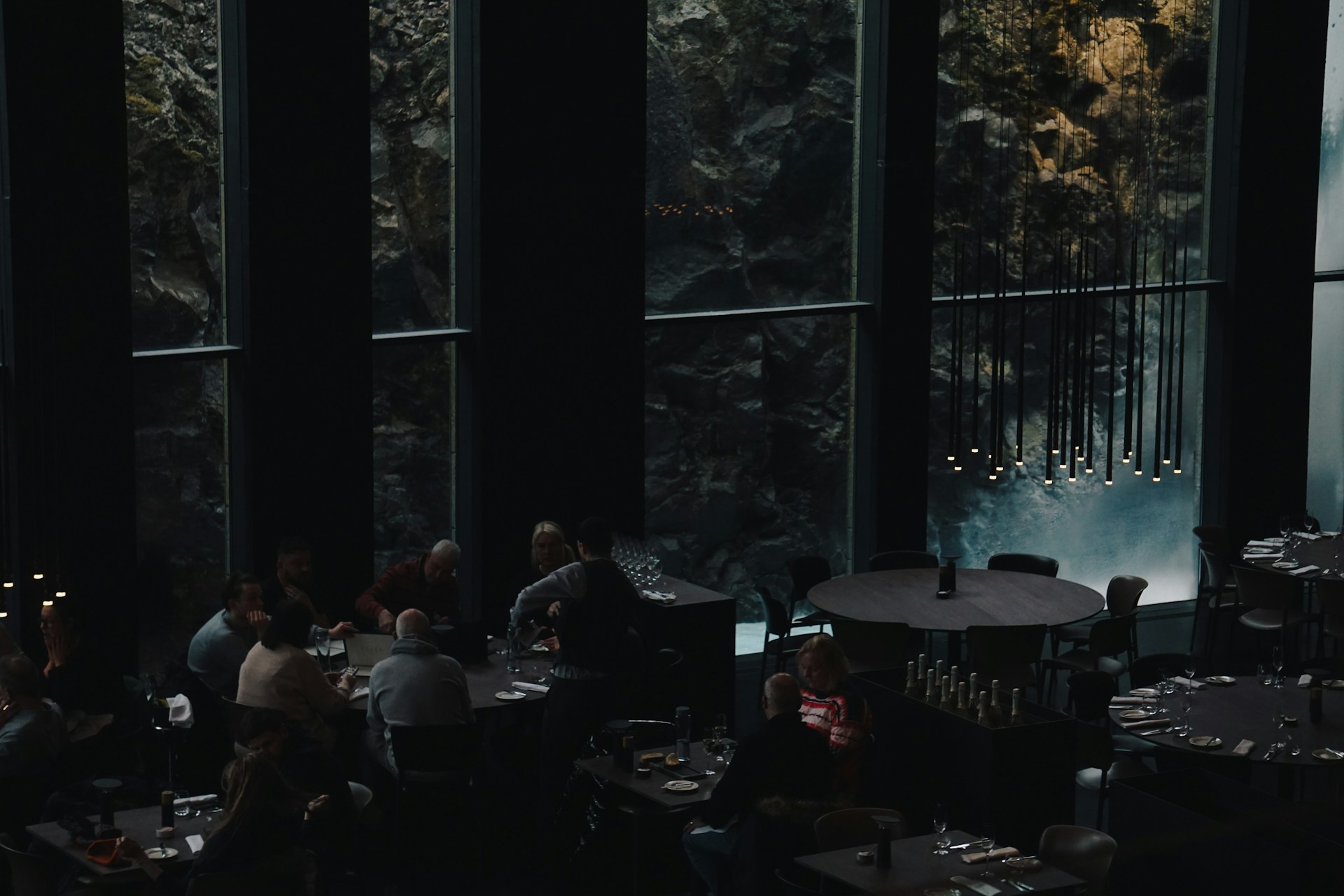
How Icelandic cuisine celebrates the island’s landscapes and the people who thrive among them.
June 19, 2026
Rugged yet refined, Iceland’s food scene is a mirror image of the island. For centuries, Icelanders have relied upon ingredients available from the sea and volcanic terrain. Today, these traditions have evolved into one of Northern Europe’s most thrilling culinary landscapes, where ancient recipes blend seamlessly with innovative fine dining that always keeps one eye trained on sustainability.
Seafood is at the heart of Icelandic cooking. The cold, nutrient-rich waters surrounding the island produce some of the world’s finest fish, with cod, haddock, Arctic char, salmon, and langoustine among the typical haul. Fresh seafood appears on menus across the country, from humble fishing villages to Michelin-starred restaurants.
Lamb is another cornerstone of Icelandic cuisine; stocky Icelandic sheep roam freely through mountain pastures during the summer, with a diet of wild herbs and berries giving the meat its distinctively delicate flavor. Dairy products also play an important role in Icelandic households, particularly skyr, a thick cultured dairy product that has been enjoyed in Iceland for over a thousand years. Try it as a light breakfast with fresh berries as an alternative to yoghurt, or even as a dessert.
Despite the harsh climate and short growing seasons, Iceland produces excellent root vegetables, including potatoes, carrots, and turnips. Geothermal energy makes it possible to grow fresh produce year-round in greenhouses, resulting in surprisingly abundant crops of tomatoes, cucumbers, and herbs.

Kjötsúpa, a hearty lamb soup made with tender meat, root vegetables, and herbs, is among the most beloved Icelandic dishes. Perfect after a day of exploring glaciers or waterfalls, it is one of the country’s ultimate comfort foods.
Plokkfiskur is another classic — this creamy fish stew traditionally prepared with boiled white fish, potatoes, onions, and a rich béchamel sauce. Often served with dark rye bread, it showcases Iceland’s talent for turning the simplest ingredients into deeply satisfying dishes.
More adventurous travelers may wish to try hákarl, fermented Greenland shark. This centuries-old specialty developed as a method of preserving food and is often sampled alongside a shot of local schnapps, which takes the edge of the strong taste. In contrast, Icelanders also have a fondness for sweet treats like kleina — twisted doughnuts flavored with cardamom.
Iceland has emerged as a leading destination for foodies, with luxurious dining opportunities throughout the country. In Reykjavík, acclaimed restaurants showcase modern Nordic cuisine by pairing local ingredients with innovative techniques and artistic presentation.
You will find that different regions of Iceland offer distinct culinary experiences. The northern town of Húsavík is known for outstanding seafood and fish dishes, while the fishing communities of the Westfjords are renowned for their cod and salt fish. The southern coast is famous for its lamb and dairy farms, where you can find a plethora of farm-to-table experiences. The small fishing village of Höfn is synonymous with Icelandic langoustine — in fact, it’s celebrated each summer with a festival dedicated to these sweet, delicate shellfish.
In the geothermal regions around Laugarvatn, you’ll taste traditional rye bread baked underground using the earth’s natural heat — a remarkable example of Icelanders’ relationship with their volcanic landscape.
Many luxury hotels and lodges also offer exclusive culinary experiences, such as private chef’s tables, foraging excursions, and multi-course tasting menus featuring ingredients gathered from nearby mountains, rivers, and coastlines. Dining beneath the midnight sun or enjoying a gourmet meal while watching the northern lights transforms food into an unforgettable part of the Icelandic journey.
Contact Darby’s Destinations to design an itinerary fusing outdoor adventure with fine dining.


.jpg)
Darby’s Destinations LLC, an accredited IATAN Travel Agency, located at 221 Tremont Street, Mansfield, MA 02048 USA. While our clients have had great experiences with the travel suppliers featured on this website, Darby’s Destinations LLC is not an employee, agent, or representative of these suppliers and, therefore, cannot make any promises regarding the service clients will receive with a particular supplier. Before booking a trip, clients are responsible for reviewing the services offered by the supplier, along with any terms, conditions, and exclusions.
Copyright © 2026, All Rights Reserved.
