

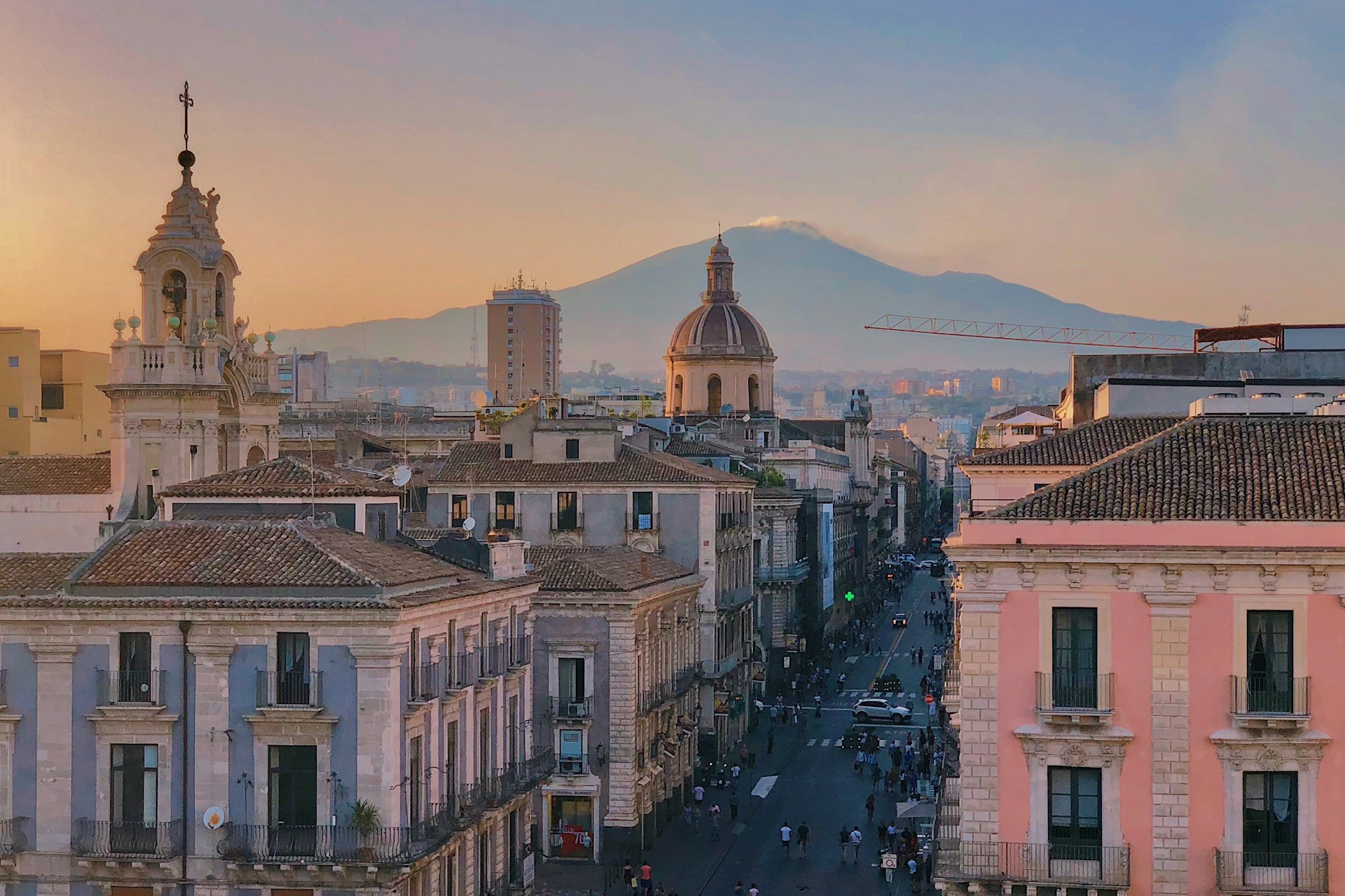
Volcanic scenery and immense history provide a backdrop to the Italian island.
September 4, 2026
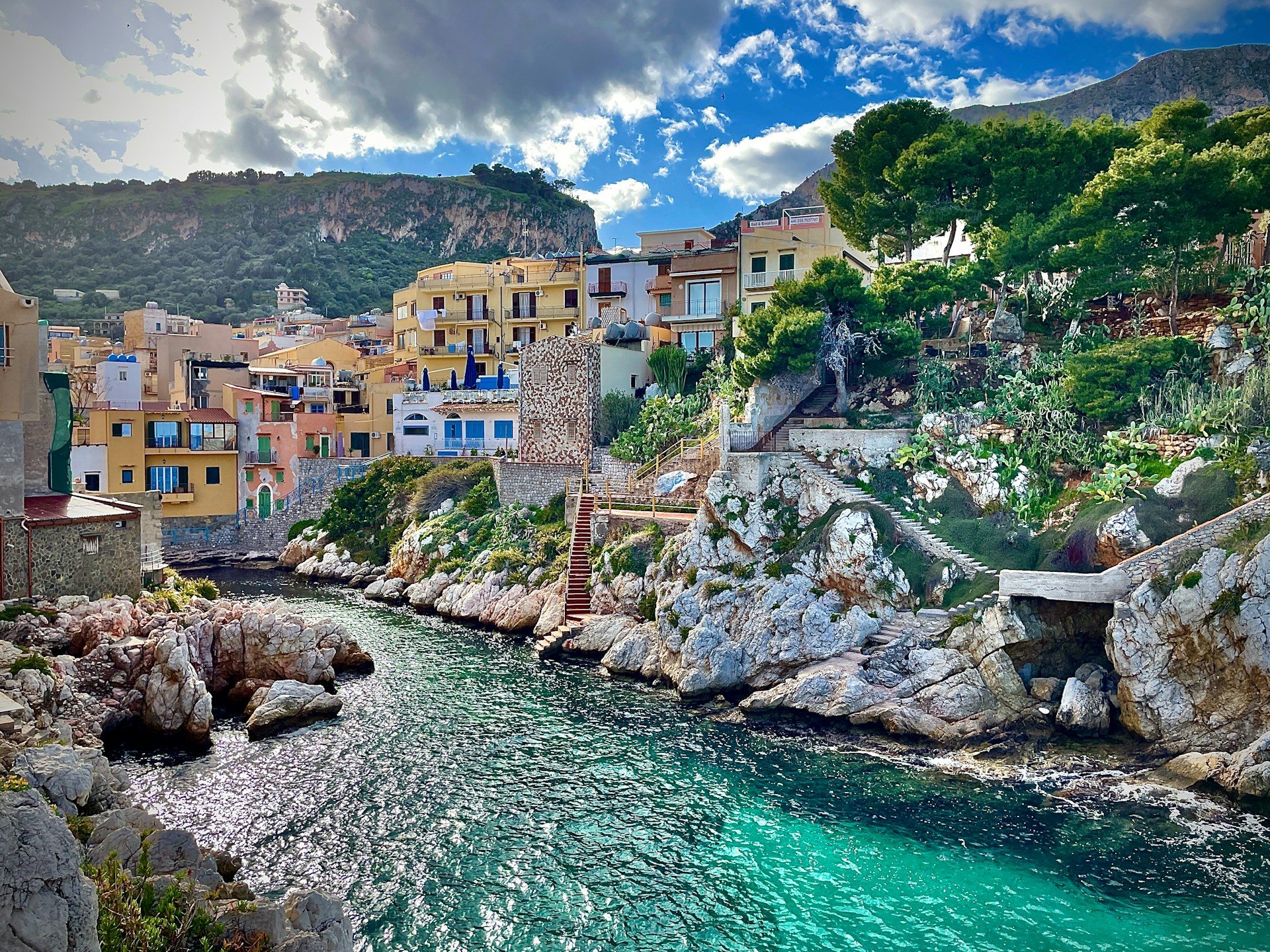
Sicily, the largest island in the Mediterranean, is shaped by centuries of migration and cultural exchange, where Greek temples, Arab-Norman architecture, Baroque towns, and lively modern cities coexist in the same landscape. Add volcanic mountains, Blue Flag beaches, and an abundant food culture into the mix, and Sicily becomes far more than the typical summer vacation.
Located on the northern coast, Palermo is Sicily’s natural starting point. History is carved into the capital’s architecture, where Phoenician, Roman, Arab, Norman, Spanish, and Italian influences have all left their mark in the streets surrounding Quattro Canti. Travelers can explore the magnificent Palermo Cathedral and the 9th-century Palazzo dei Normanni, whose Palatine Chapel is celebrated for its extraordinary Byzantine mosaics. Vibrant street markets like Ballarò provide an opportunity to taste the island specialties of arancina (rice balls), sfincione (thick Sicilian pizza), and cannoli (fried confectionery).
Wine enthusiasts may venture west along the coast to Marsala to sample the city’s namesake fortified, dry, and sweet wines. The Phoenicians are responsible for the earliest cultivation of wine, but it was an 18th-century merchant from England who takes the credit for adding a drop of aqua-vitae to the goods, the intention being to preserve the wine at sea. Extraction continues at the nearby salt pans of Trapani, which also provide a safe habitat for resident and migratory birds.
Rising dramatically above eastern Sicily and the central Madonie Mountains, Mount Etna is Europe’s highest active volcano. Connecting Catania with Riposto, the Ferrovia Circumetnea railway is a unique way to get closer to the volcanic scenery in comfort. The three-hour circuit passes lava flow from the 1669 eruption and the village of Bronte, where Sicily’s prized pistachio is cultivated. A wine tour upgrade is available for passengers riding on Thursdays and Sundays.
Perched above the coast with views towards Etna and the Ionian Sea, the elegant city of Taormina offers another perspective on Sicily’s eastern coast. The ancient Greek theater is the headline attraction, but a boat tour to Isola Bella shouldn’t be overlooked.
Further south, Syracuse sweeps visitors through Greek and Roman history, particularly on the small island of Ortigia where narrow streets lead to ancient temples and charming piazzas. Nearby, the Neapolis Archaeological Park preserves a significant number of monuments.
The region of Val di Noto presents astonishing Baroque architecture that emerged after the devastating earthquake of 1693. The inland towns of Noto, Modica, and Ragusa offer a different side of Sicily, one of ornate façades and honey-hued stone. Modica is equally renowned for its chocolate-making tradition, which adheres to ancient cold-pressed techniques. With no cocoa butter and no conching during the process, the chocolate has a distinctly rough texture
One of Sicily’s greatest archaeological experiences claims the island’s southern coast. At the Valley of the Temples (Valle dei Templi) stand the imposing Doric temples of ancient Akragas, dating largely from the 5th century BCE. This UNESCO World Heritage Site is one of the most remarkable testimonies to Hellenic civilization in Italy, with temples dedicated to Zeus, Hera, the Discouri (Castor and Pollux), Herakles, and more. The site also contains a necropolis, agora, hydraulic works, and fortifications,
Reachable via plane or boat from Italy’s mainland, Sicily is best experienced as a journey through its layered Mediterranean history, living traditions, extraordinary landscapes, and delectable wine and cuisine. Contact Darby’s Destinations to design your itinerary.


.jpg)
Darby’s Destinations LLC, an accredited IATAN Travel Agency, located at 221 Tremont Street, Mansfield, MA 02048 USA. While our clients have had great experiences with the travel suppliers featured on this website, Darby’s Destinations LLC is not an employee, agent, or representative of these suppliers and, therefore, cannot make any promises regarding the service clients will receive with a particular supplier. Before booking a trip, clients are responsible for reviewing the services offered by the supplier, along with any terms, conditions, and exclusions.
Copyright © 2026, All Rights Reserved.
