

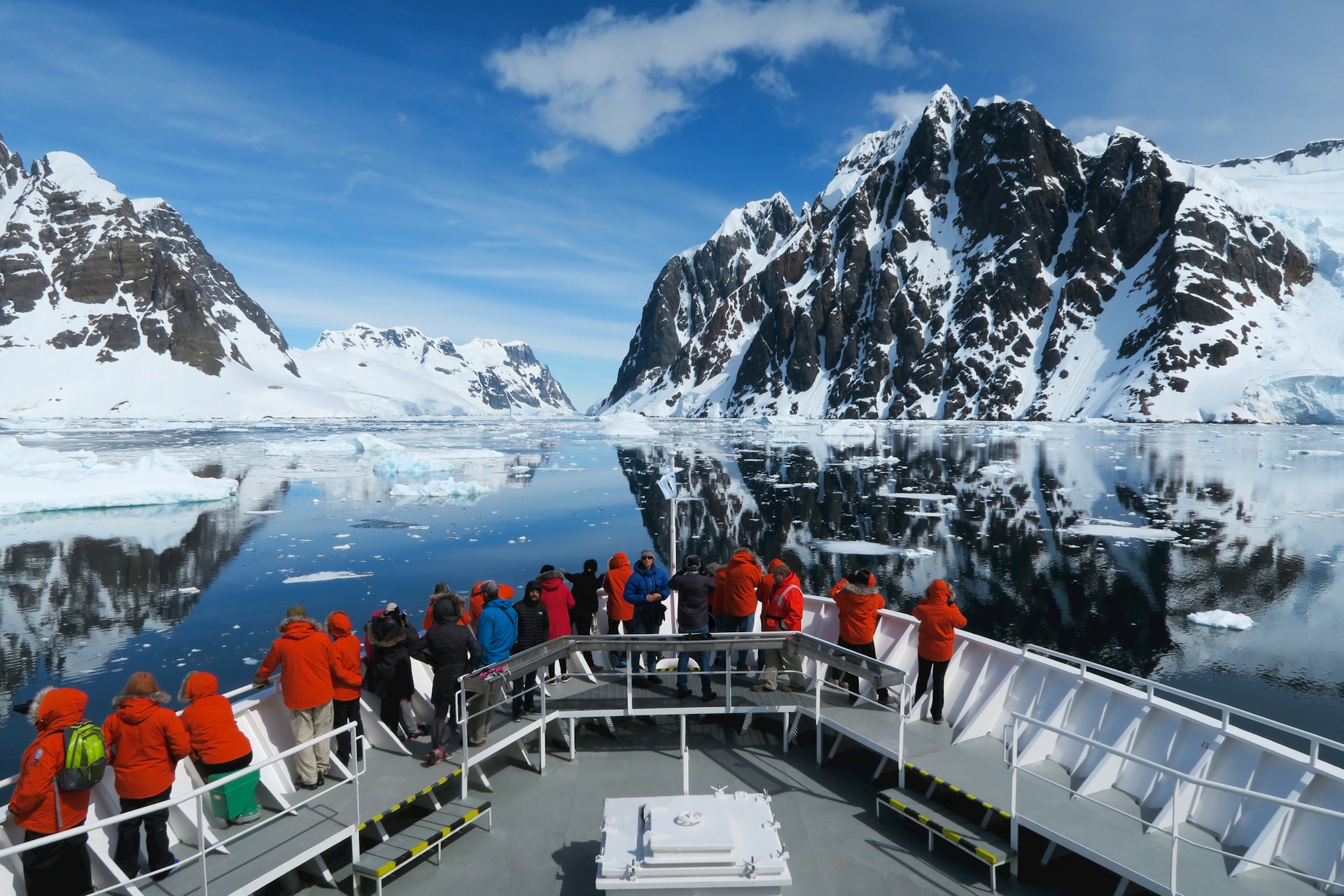
Two very different ways to reach the White Continent — and how to know which one might be right for you.
August 28, 2026
Antarctica has a way of making even the well-traveled go quiet. There's no fully preparing yourself for the moment the Drake Passage opens onto a sky full of icebergs — you have to see it. Two of our favorite ways to get there, Seabourn's 13-Day Antarctica Exploration and Viking's Antarctic Explorer, both start in Buenos Aires and spend roughly a week in Antarctic waters. Look closely at the route each one follows, though, and the two trips tell very different stories.
Seabourn's route is a loop. You'd spend two days in Buenos Aires first, with a stay at the Alvear Palace Hotel, before a private air charter carries you to Ushuaia — skipping the long sail around the tip of South America to reach the embarkation port. From Ushuaia, the ship does the rest: two days sailing the Drake Passage to reach Antarctica, a full week of daily calls along the Peninsula, and two more days sailing the Drake back before a charter flight returns you to Buenos Aires. The Drake itself is sailed both ways, just as it is on Viking's route.
Seven full days ashore: each Antarctic day follows an arrive-by-7-a.m., depart-by-5-p.m. rhythm, with included Zodiac Cultural Tours, optional kayaking, taking the Polar Plunge, and the Image Masters photography program built into that daily window.
Where it explores: this itinerary enters near Antarctic Sound, then works southwest through the Bransfield and Gerlache Straits, reaching as far as the Lemaire Channel before turning back for Ushuaia — a longer north-to-south sweep of coastline over those seven days.
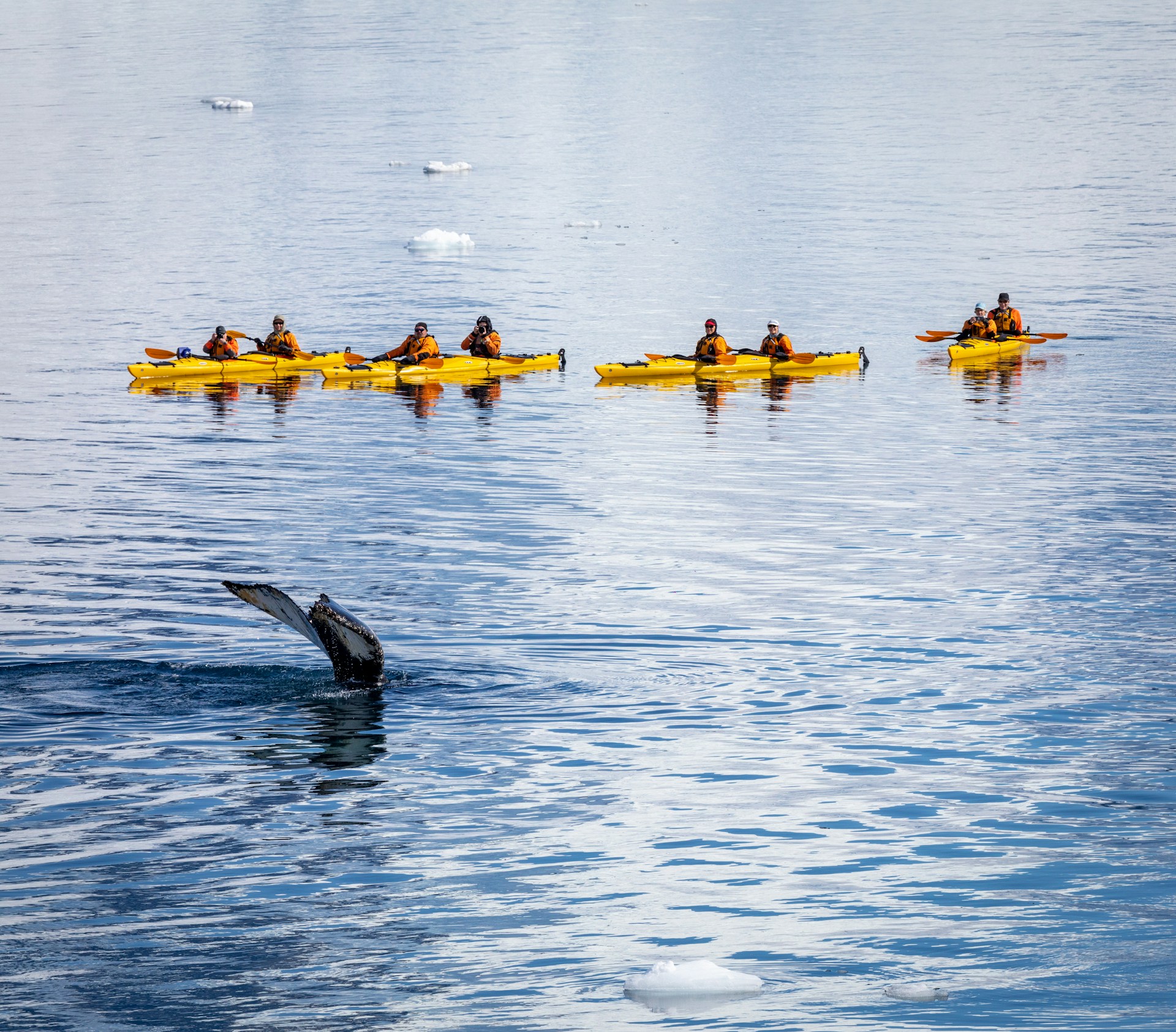
Viking's route runs point to point. After a day in Buenos Aires and a scenic transfer to Ushuaia, the ship sails south through the Drake Passage to reach Antarctica. Days four through ten are spent working through the Antarctic Peninsula and Gerlache Strait, with more time in the ice than daily port-style calls. The journey home retraces the Drake, then adds a stop Seabourn's route skips entirely: a scenic sail past Cape Horn before the ship docks in Ushuaia and your trip ends there, with no return leg to Buenos Aires.
A hand in real science: you can descend by submarine to see marine life and ice formations no deck rail reveals, and the onboard Science Lab, built with the University of Cambridge and NIVA, lets you take part in real polar research, from microplastic sampling to fish monitoring.
Where it explores: this itinerary stays more concentrated, looping through the Gerlache Strait and the Antarctic Peninsula without pushing as far south as Seabourn's — trading distance covered for more time anchored in fewer places. It also passes Cape Horn right alongside Ushuaia on the way home, territory Seabourn's route never touches.
The practical difference comes down to the bookends. Seabourn's charter flights skip the days-long sail around South America and return you to Buenos Aires, so you can add a few extra days in the city if you'd like. Viking covers that same stretch by sea rather than air and closes with Cape Horn, but sends you home from Ushuaia instead, which changes how a pre- or post-cruise stay should be planned. Neither route is the better one — the right fit depends on how you want to spend those two Drake crossings and where you'd rather land at the end.
If Antarctica has found its way onto your list, get in touch — I'd love to help you figure out which ship, and which version of the White Continent, is the right one for you.


.jpg)
Darby’s Destinations LLC, an accredited IATAN Travel Agency, located at 221 Tremont Street, Mansfield, MA 02048 USA. While our clients have had great experiences with the travel suppliers featured on this website, Darby’s Destinations LLC is not an employee, agent, or representative of these suppliers and, therefore, cannot make any promises regarding the service clients will receive with a particular supplier. Before booking a trip, clients are responsible for reviewing the services offered by the supplier, along with any terms, conditions, and exclusions.
Copyright © 2026, All Rights Reserved.
